
RERA, GST, and Stamp Duty: What Real Estate Teams Need in Their Contract Workflows
RERA, GST, and stamp duty create recurring compliance obligations that manual real estate contract workflows cannot reliably track. Digital CLM with governed templates, e-stamping, and automated milestone tracking keeps every agreement audit-ready.

Real Estate Contract Compliance Is Not a One-Time Event
A property agreement in India is not just a record of what two parties agreed. It is a compliance event that triggers obligations under RERA, the Indian Stamp Act, the Registration Act, and GST simultaneously, in combinations that vary by transaction type, state, and the parties involved.
Most real estate teams are aware of these obligations in principle. The problem is not knowledge. It is that manually tracking a compliance calendar across multiple transactions, multiple agreement types, and multiple states is not reliably doable at volume. Things are missed, not because of negligence, but because the system for tracking them was never built.
What RERA Actually Requires From Your Agreements
The Real Estate (Regulation and Development) Act, 2016 changed the documentation standard for builder-buyer transactions in ways that are still not fully reflected in how many developers operate.
Prescribed content requirements
- Carpet area as the pricing basis, not super built-up area
- Payment schedule tied explicitly to construction milestones
- Defined possession date with consequences for delay
- Specifications for finishes, fittings, and common area commitments
The registration sequence
- The agreement to sell must be registered before the builder accepts more than ten percent of consideration
- This is a workflow requirement, not just a legal formality
- A contract system that does not enforce this sequence creates compliance exposure on every transaction
State-level variation
- RERA is administered at the state level and state rules vary
- The prescribed format in Maharashtra is not identical to Karnataka
- Governed templates need state-specific variants that update when state rules change
Stamp Duty: Variable, State-Specific, and Non-Negotiable
Stamp duty on property agreements varies significantly by state, agreement type, and sometimes the parties involved. Errors in computation create deficient instruments that are inadmissible in evidence until the shortfall and penalty are paid.
Where manual computation fails
- Wrong rate applied for the agreement type or jurisdiction
- Concessional rates for eligible parties missed or misapplied
- Physical stamp affixed to the wrong document version
What e-stamping through SHCIL solves
- Computes applicable duty based on agreement type and consideration
- Applies the correct rate for the jurisdiction automatically
- Produces a tamper-evident electronic stamp certificate attached to the agreement record
The volume argument
- For developers managing dozens of sale agreements simultaneously, or property managers handling large rental portfolios, integrating e-stamping into the agreement workflow means every executed document is correctly stamped without a separate process step
GST and Commercial Property: Getting the Documentation Trail Right
Commercial property rentals where the landlord is GST-registered attract GST at eighteen percent on the rental consideration. The documentation requirements are specific and frequently handled inconsistently.
What the agreement needs to capture
- Consideration stated exclusive of GST
- Applicable GST rate specified
- Invoicing arrangement defined: who issues, when, and in what format
Where amendments create GST risk
- Rental revisions at renewal, mid-term renegotiation, or escalation change the GST liability
- A version-controlled amendment record with timestamps and approval history gives both parties a clean audit trail for GST purposes
- An informal amendment agreed over email and not documented creates ambiguity that surfaces at assessment
Builder-buyer agreements and construction-linked payments
- Payments at different construction stages are treated differently under GST depending on whether the property is under construction or completed
- The payment milestone structure in the agreement needs to be precise enough to support the GST treatment applied to each instalment
Registration: Sequence Matters as Much as Compliance
Registration requirements are well understood in principle but frequently mishandled because the sequence between drafting, execution, stamping, and registration is not managed as a workflow.
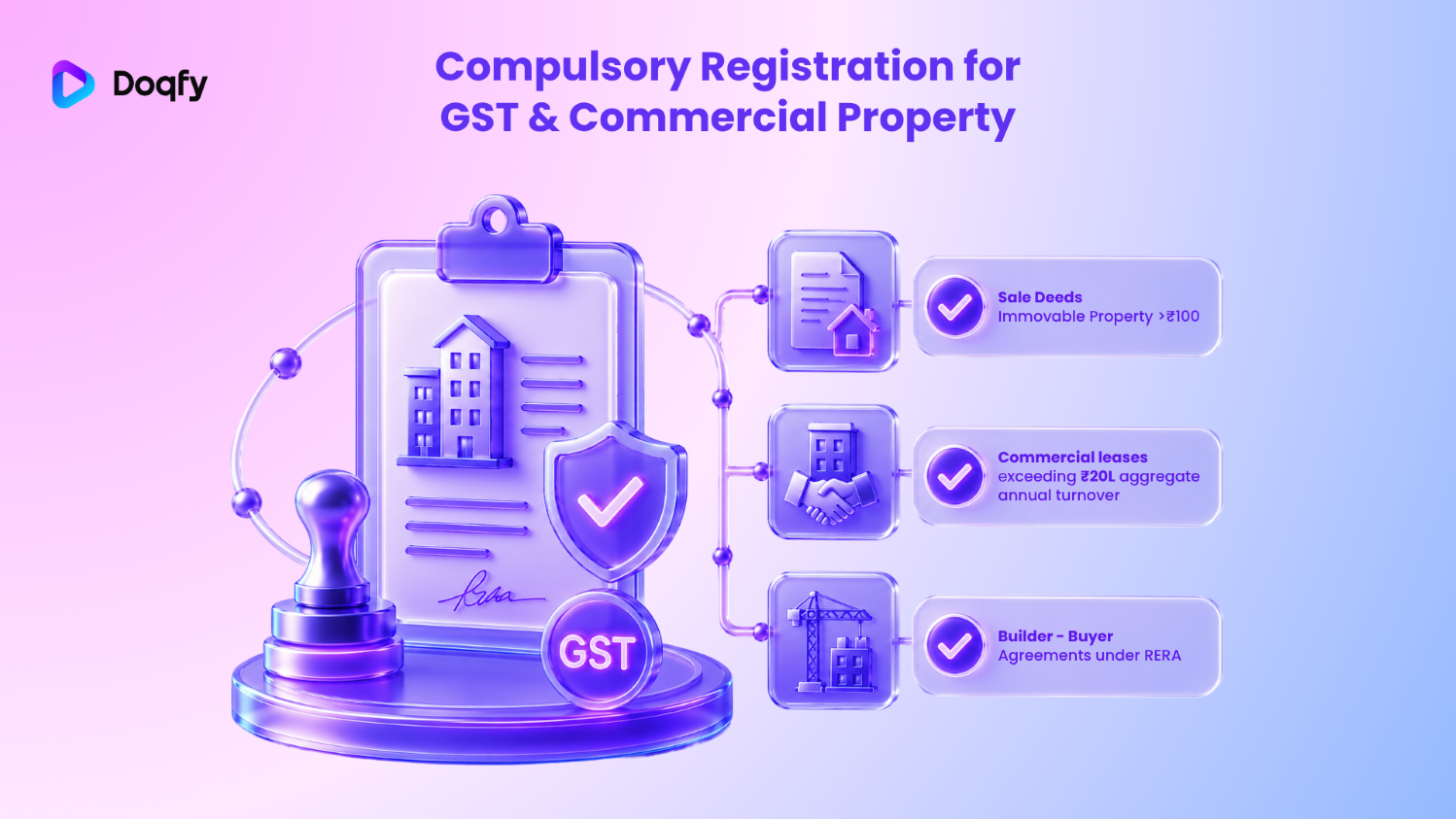
What requires compulsory registration
- Sale deeds transferring rights in immovable property valued above ₹100
- Long-term commercial leases, or those with aggregate annual turnovers exceeding ₹20 Lakhs
- Builder-buyer agreements under RERA, in the specific sequence relative to payment acceptance
What a workflow needs to track
- Registration as a milestone that routes the document to the relevant authority at the right stage
- A record of registration completion linked to the agreement
- An alert if the registration step has not been completed before the next payment trigger is reached
Building a Workflow That Handles All of This
The compliance obligations across RERA, stamp duty, GST, and registration apply simultaneously, across different agreement types, in different combinations by state and transaction type, and at high volume. Encoding compliance requirements into the workflow is the only way to apply them consistently.
Governed templates
- State-specific formats that reflect RERA prescribed content
- Mandatory fields that enforce compliant clauses before execution is permitted
- Updated centrally when state rules change
Integrated e-stamping
- Correct duty computed and applied at execution
- No separate process step, no manual rate lookup
Registration and milestone tracking
- Registration requirement surfaced at the right point in the transaction sequence
- Completion recorded and linked to the agreement record
Version-controlled amendment records
- Every change to terms captured with timestamp and approval record
- Clean audit trail for GST, RERA, and dispute purposes across the full agreement lifecycle
Conclusion
RERA, GST, stamp duty, and registration are not bureaucratic inconveniences. They are the legal infrastructure within which every Indian real estate transaction operates, and getting them wrong has consequences that range from unenforceable agreements to penalties to disputes that could have been avoided.
Real estate teams managing these obligations manually across high transaction volumes are running a compliance program that depends entirely on individual memory. That is not sustainable as volumes grow.
Contract workflows that encode the compliance requirements, enforce them at execution, and maintain the documentation trail that audits require make it possible to move faster with confidence that every document leaving the system is compliant.
Manage RERA, stamp duty, and GST documentation in one place with Doqfy.