
Reducing Contract Risks: How Automation Prevents Legal Disputes in India with Contract Risk Management
Contract risk management in India improves with automated workflows: templates, playbooks, rule-based approvals, version control, tamper-evident execution, and obligation tracking. Electronic records and e-signatures are valid under the IT Act, 2000, with audit trails supporting Evidence Act 65B.
Contract Risk Management in India is Becoming An Operational Mandate
Contract risk management in India is no longer just legal’s problem.
It is an operational expectation across sales, procurement, finance, and compliance because disputes increasingly start with small process gaps: the wrong version sent, an approval skipped, a clause edited without traceability, or a notice period missed.
Automation reduces these risks by turning contracting into a controlled workflow with evidence, consistency, and accountability built in.
India’s IT Act also provides legal recognition for electronic records and electronic signatures, which strengthens the case for digitised, auditable contract execution.
Contract Risk Management: Dispute Triggers Prevented by Automation
Most disputes arise from ambiguity and a lack of proof. The patterns below show up across vendor contracts, employment terms, service agreements, and enterprise sales.
- Version confusion
- Multiple contract versions floating across email threads
- Final signed copy not clearly identifiable as the source of truth
- Uncontrolled deviations
- Non-standard clauses added without legal review
- Commercial teams accepting risky edits to close deals faster
- Weak evidence trails
- No clear record of who approved what and when
- Missing execution proof for digital workflows
- Obligation and notice failures
- Missed renewal windows, termination notices, SLAs, or payment triggers
- Poor clause visibility
- Teams do not know what they have agreed to until the dispute arrives
The Legal Baseline for Evidence and Process
Indian contracts still rely on the usual fundamentals: free consent, lawful consideration, lawful object, and competent parties. If these basics are shaky, automation cannot rescue enforceability.
At the same time, modern disputes often revolve around digital proof.
Electronic records and electronic signatures receive legal recognition under the IT Act, 2000, but dispute readiness depends on how well you preserve and produce electronic evidence.
In many court scenarios involving electronic records presented as secondary evidence, Evidence Act Section 65B certificate requirements become relevant, with the Supreme Court clarifying its mandatory nature in key judgments.
How Contract Automation Prevents Legal Disputes
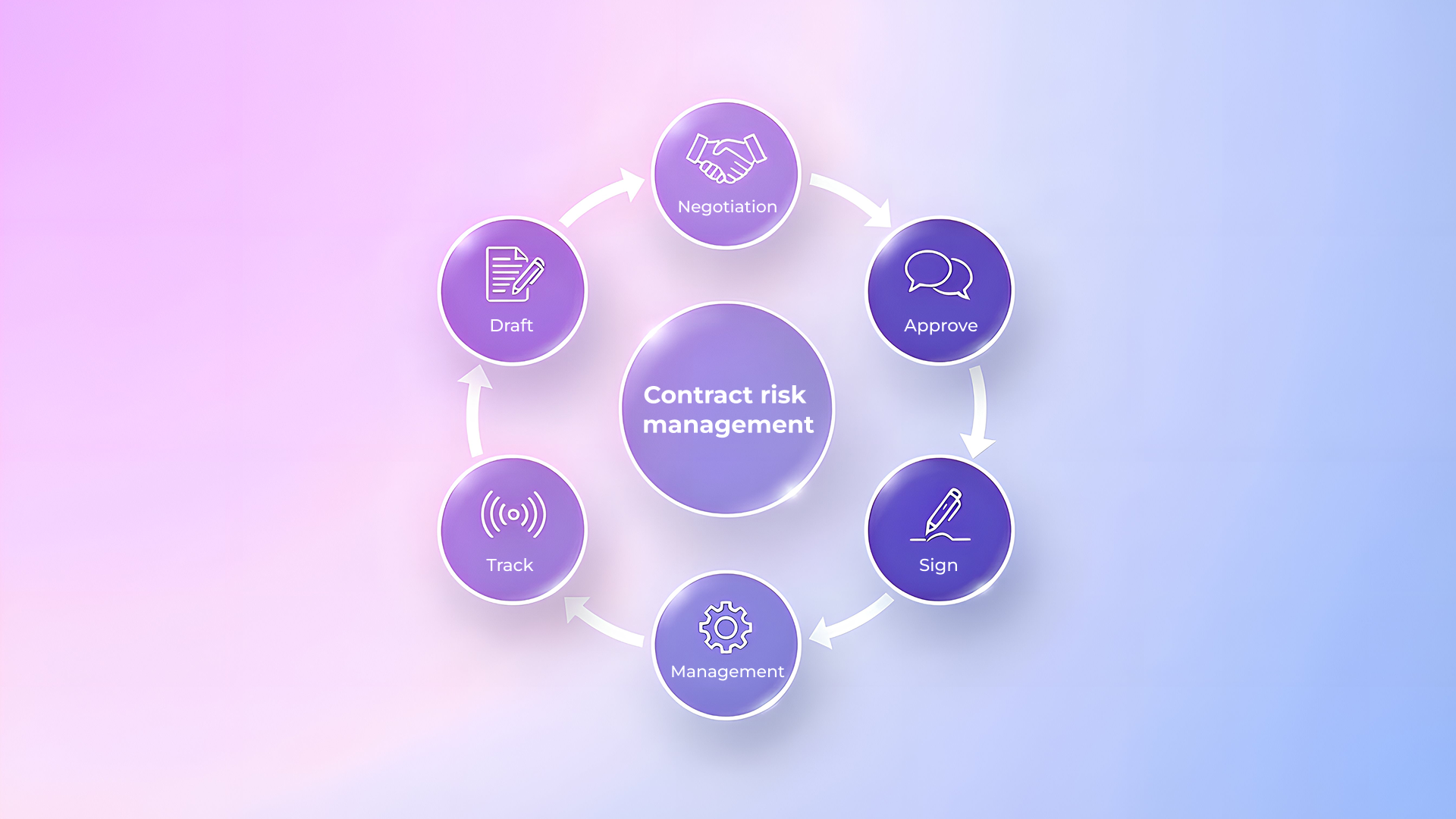
Automation works best when it reduces ambiguity, prevents unauthorized changes, and makes proof easy to retrieve. The strongest systems do not just digitise documents, they operationalise governance.
Here are the highest impact automation controls for contract risk management:
- Template and playbook standardisation
- Approved templates by contract type
- Clause libraries with fallback positions for negotiation
- Rule-based approvals and deviation gates
- Auto-routing based on contract value, entity, jurisdiction, and risk level
- Escalations when red-flag clauses change
- Version control and audit trails
- Every edit logged with user, time, and reason
- Clean redlines and change summaries for reviewers
- Tamper-evident execution and storage
- Clear final version identification
- Integrity protection so signed copies cannot be silently altered
- Obligation tracking
- Notice periods, renewals, SLAs, and milestones tracked with owners and reminders
Contract Workflow Design that Scales Across Teams
The fastest way to create risk is to let every team run its own contracting ritual. The fastest way to reduce disputes is to standardise the path, then allow exceptions with controlled approvals.
Use this rollout sequence to make automation adoption stick:
- Start with one contract category
Pick a high-volume lane: vendor agreements, NDAs, MSAs, service contracts
- Define what is standard vs negotiable
Map clauses into buckets:
- standard and locked
- negotiable with fallback
- high-risk and always escalated
- Make approvals predictable
Assign ownership by risk type, not only by department
- Embed execution inside the workflow
Avoid “download, sign somewhere, re-upload” patterns unless tightly controlled
- Track outcomes
Cycle time, deviation rate, missed notice periods, dispute incidents
Dispute Readiness Checklist for Automated Contracts
Contracting feels successful when the deal is signed. Dispute readiness is about whether you can prove the facts later, quickly, and consistently. This is where automation quietly pays for itself.
Use this checklist to verify dispute readiness:
- Identity and authority
Party details, signatory authority records, and signer authentication evidence
- Integrity
Final signed version clearly identified with tamper-evident protection
- Traceability
Complete history of edits, approvals, and exceptions
- Admissibility support
Evidence package and retrieval process that can support electronic evidence requirements when needed
- Obligation proof
Logs showing reminders, acknowledgements, and actions taken on key obligations
Conclusion
Summing up, contract risk management in India is increasingly about reducing ambiguity before it becomes a dispute. Automation prevents legal disputes by enforcing standard terms, controlling deviations, preserving audit trails, protecting document integrity, and tracking obligations with accountability.
If your contracts are a business system, your workflow should behave like one. When the next disagreement shows up, the goal is simple: no scrambling, no missing versions, and no uncertainty about what was agreed, by whom, and when.
Enforce risk management across all contracts and prevent legal disputes with Doqfy CLM.