
Contract Approval Delays: What Really Slows Teams Down
A practical blog on contract approval delays, what causes them, and how contract lifecycle management software helps teams reduce bottlenecks through better workflows, visibility, and execution control.

Introduction
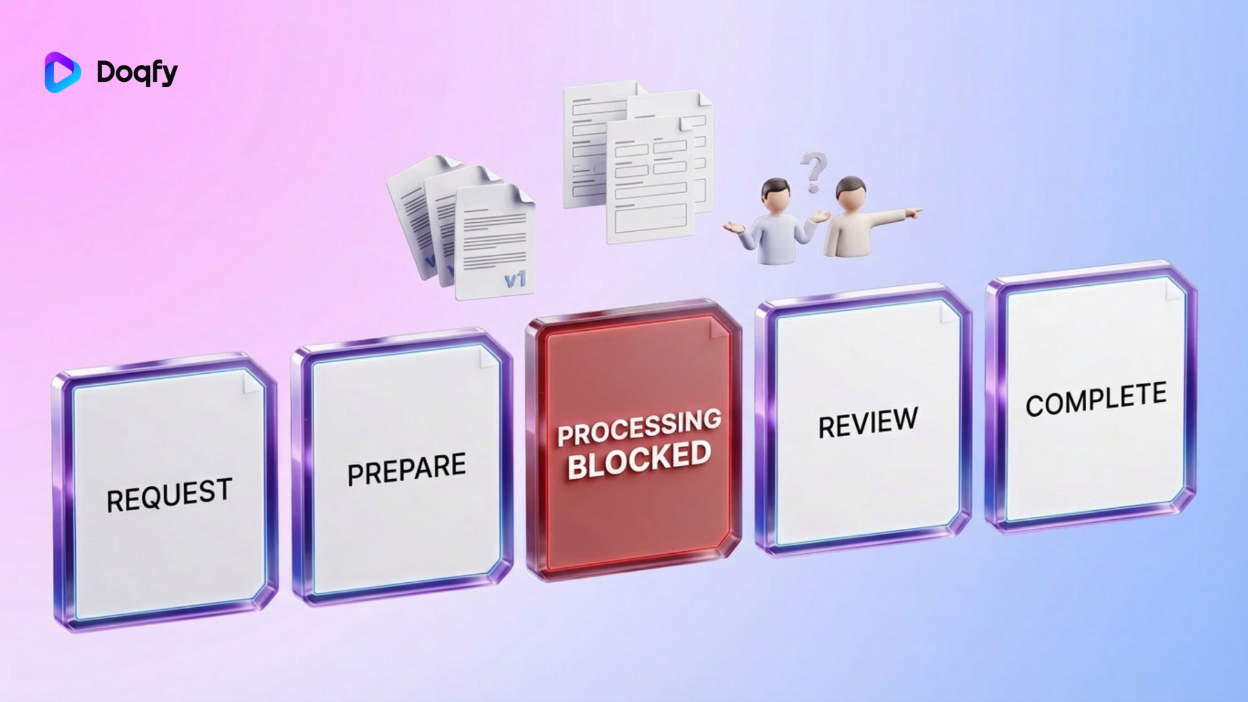
Most contract approval delays do not begin with legal review. Even when a contract may be ready to move, key details are often missing.
The right approver is unclear.
A stakeholder is added halfway through. Someone is reviewing an outdated version. Someone else thinks approval already happened.
By the time the contract is actually signed, the delay has already been baked into the process.
The work is not only about reviewing terms. It is about chasing inputs, checking status, clarifying ownership, and trying to keep movement intact across multiple handoffs.
The right contract management software does not only record approvals. It helps reduce the operational friction that slows approvals down in the first place.
This matters even more when agreement volume grows. Because one approval delay is a nuisance.
Fifty of them become a system failure.
What Actually Slows Contract Approvals Down
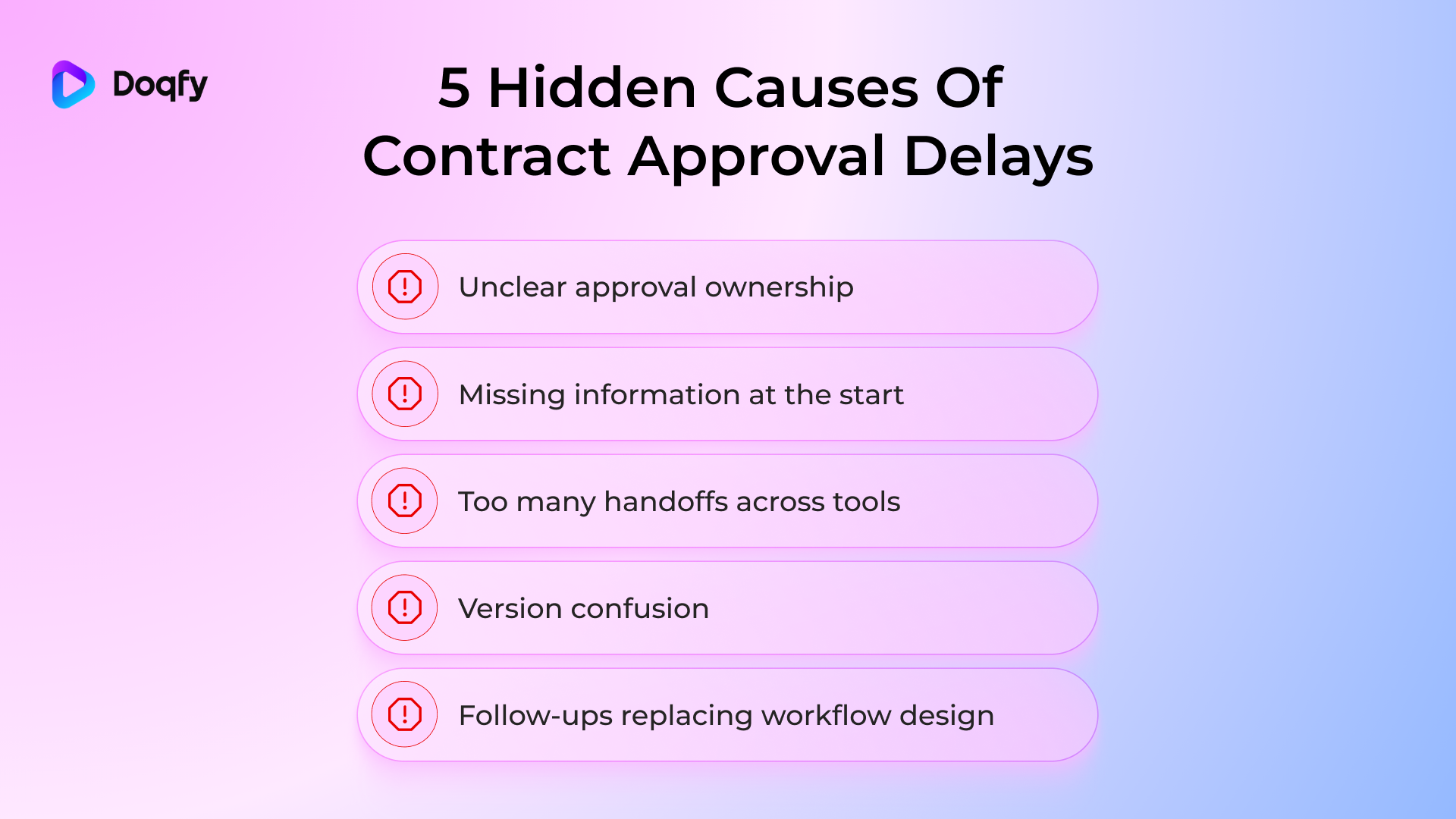
1. Unclear approval ownership
- Teams often know a contract needs approval, but not exactly who should approve it.
- This creates internal back-and-forth before review even begins.
- The result is delay disguised as coordination.
2. Missing information at the start
- Many contracts reach approvers before commercial or operational details are complete.
- That forces approvers to pause, ask questions, or send the contract back.
- Approval slows because the file entered the workflow too early.
3. Too many handoffs across tools
- When drafting, comments, approvals, and execution happen in separate systems, progress becomes harder to track.
- Teams waste time asking for status updates instead of moving the contract forward.
- This is one of the most common causes of approval drag.
4. Version confusion
- Approvers should never have to guess which draft is current.
- But in manual workflows, that happens often.
- A single outdated attachment can reset momentum and create unnecessary rework.
5. Follow-ups replacing workflow design
- Many approval processes depend on repeated reminders from legal or operations teams.
- That may work occasionally.
- It does not scale.
Why Contract Teams Feel Stuck in Process Work
Approval delays are frustrating because they rarely look dramatic.
They look small:
A missed reply.
A pending comment.
A contract sitting in someone’s inbox for two extra days.
But in contract management, small delays stack up fast. That is why so many contract teams end up managing process more than contracts.
Instead of focusing on language, risk, or business context, they spend time moving documents, checking status, and closing gaps between stakeholders.
When the process depends on memory, inbox discipline, and manual follow-ups, teams become the workflow. That is not sustainable.
A stronger CLM setup creates structure around who approves what, when it should move, and how progress stays visible.
How Doqfy Supports Smoother Approval Movement
Approval speed improves when the process around approval becomes more structured.
At Doqfy, that means helping teams reduce friction before, during, and after review so contracts do not stall in avoidable ways.
- Approval workflows that move agreements to the right stakeholders with more clarity
- Centralized contract repository so teams can work with better visibility and retrieval
- eSign and DSC-based execution to prevent delays after approvals are complete
- eStamping and execution readiness for smoother contract completion
- Alerts, reminders, and renewal tracking to keep contract movement visible across the lifecycle
With the workflow better connected, approvals stop feeling like isolated bottlenecks and start becoming part of a cleaner contract system.
What Better Approval Management Looks Like
1. Fewer unclear starts
- Contracts enter the approval flow with the right information.
- That reduces preventable pauses.
2. Clearer routing
- Teams know who needs to review and in what sequence.
- That improves movement without adding complexity.
3. Better visibility
- Everyone can see what is pending, approved, or stuck.
- This cuts down on status-chasing.
4. Less version risk
- A shared workflow reduces the chance of outdated drafts circulating during review.
- That keeps momentum intact.
5. Faster completion after approval
- A contract should not slow down again once approvals are done.
- Signing, stamping, and storage should follow smoothly.
Conclusion
Contract approval delays rarely come from one dramatic breakdown.
They come from small process gaps that repeat across the contract lifecycle.
For growing businesses, fixing approval delays means designing a better contract workflow.
It helps teams bring clarity, movement, and visibility into a process that often gets buried under manual coordination. And when approval movement improves, contract turnaround improves with it.
If your team is spending too much time chasing approvals instead of moving agreements forward, it may be time to look at the workflow more closely.
Book a demo with Doqfy to see how structured contract workflows can reduce approval delays and make contract execution easier to manage end to end.